Hello,
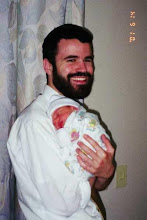
In memory of Mort Levy, a good friend who passed away last night:
"Shammai taught: Make your Torah study regular, speak little but do much, and greet every person pleasantly."
(Pirkei Avot 1:15)
Have a good day,
Mordechai
Wednesday, April 30, 2008


Tuesday, April 29, 2008
The severity of rabbinic law
Hello,
"Rabbi Zerika said, citing Rabbi Elazar: One who takes the mitzvah of hand-washing [before eating bread] lightly will be uprooted from the world."
(Talmud, Sotah 4b)
Rashi explains, citing the Talmud elsewhere: "For one who violates the words of the sages is liable for death, as it is written (Ecclesiastes 10), 'One who breaks through a fence will be bitten by a snake.'"
This ought to provide pause on both sides - by those who would violate rabbinic law, obviously, but also by those who would create it. Creating laws which others will take lightly presents a serious stumbling block to the public.
Have a great day,
Mordechai
Monday, April 28, 2008
Love, and Imitating Gd
Hello,
"To no other being but man did Gd give the eyes to discern Him and to recognize Him. But the purpose of this recognition should be to imitate Him in action, for Gd created you in His image.
"And just as the one aspect of Gd which you can behold everywhere and always is His activity, and this activity is nothing but love - the birth of creation is love, the existence of every creature is love, the maintenance of the world is love, its ordering and advancement is love, love for the whole, for every individual, for you - so let the goal of your striving after Gd be love, love in deed and action with every power that is in you, in every moment of your existence, in order that you may become a blessing in your own circle, in whatever way and whatever place you can."
(R' Shimshon Raphael Hirsch, Horeb, paragraph 481)
Have a great day,
Mordechai
Sunday, April 27, 2008
Crowd psychology
Hi,
Preface:
1. In capital cases, the Sanhedrin heard all of the evidence, asked any questions, and then met to deliberate.
2. Capital cases could not be decided on the same day the evidence was heard; the court was required to deliberate at least into the next day.
"If the entire court believes the defendant is guilty, the defendant is freed.
"Why? Because we have learned that we hold judgment until the next day in order to permit the judges to find merit for the defendant, and these judges will no longer be able to see merit for him."
(Talmud Bavli, Sanhedrin 17a)
Have a great day,
Mordechai
Thursday, April 24, 2008
Opening the door at the Seder
Hi,
Towards the end of the Seder, we open the door. Many people have a tradition of singing the song "Eliyahu haNavi," "Elijah the Prophet," about Eliyahu. The penultimate sentence in the 3rd chapter in Malachi declares that Eliyahu will come to herald the arrival of Mashiach.
The origin of the door-opening practice is two-fold:
1. To show our confidence that Gd will protect us on this evening, just He protected us in Egypt long ago (Shmot 12:42).
2. To invoke our faith that Gd will send Mashiach to lead us back home and rebuild the Temple.
(Mishneh Berurah 480:10)
Have a great day,
Mordechai
Wednesday, April 23, 2008
Our "URchatz" Washing
Hello,
At the Seder on Passover evening, before Karpas, we wash our hands - but there are two different washing practices:
A) Some families have water brought out, and the hands of the head of the Seder are washed.
B) In other families, everyone's hands are washed.
Why are there two different customs?
Rabbi Yaakov Wehl suggests that there are two sources for the hand-washing practice.
A) One reason is to vary from general practice (in which we wash only for bread, not for fruits and vegetables), inspiring questions from our children. We successfully highlight that variation even if just one person washes.
B) The other reason to wash is to recall Temple times, when even produce was eaten in purity, requiring hand-washing. According to this source, everyone should wash.
Have a great day,
Mordechai
Tuesday, April 22, 2008
Enemies and Enemies, Lavan and Esav
Good moed,
In the Haggadah we read at the Passover Seder, we talked about the desire of Lavan to destroy the Jewish people, as he pursued Yaakov. It is odd that we singled out Lavan, and never even mentioned Yaakov's brother, Esav, who also tried to kill him!
The Maharal of Prague explained that we mention Lavan on Pesach night because his brand of hatred represents the unique enmity faced by Jews through the generations. Esav tried to kill Yaakov because Yaakov received the blessings, but Lavan hated without cause - Yaakov had only helped him grow in wealth, and now Lavan wanted to kill him. Thus we mention Lavan's hatred at the Seder, reminding ourselves of the hatred we have faced, and the fact that Gd has saved us time and time again, even from such irrationally implacable enemies.
Have a great day,
Mordechai
Subscribe to:
Posts (Atom)